
Congress Can Support Accountable Care
Participating in accountable care payment models is how many physicians and other clinicians choose to deliver care to their patients. It supports better coordination, improved outcomes, and the flexibility to offer additional services patients need. It also helps address cash flow challenges by providing more predictable, stable payments. As more providers transition into these payment models, the results are clear — clinicians are providing better care, keeping patients healthier, and lowering costs.
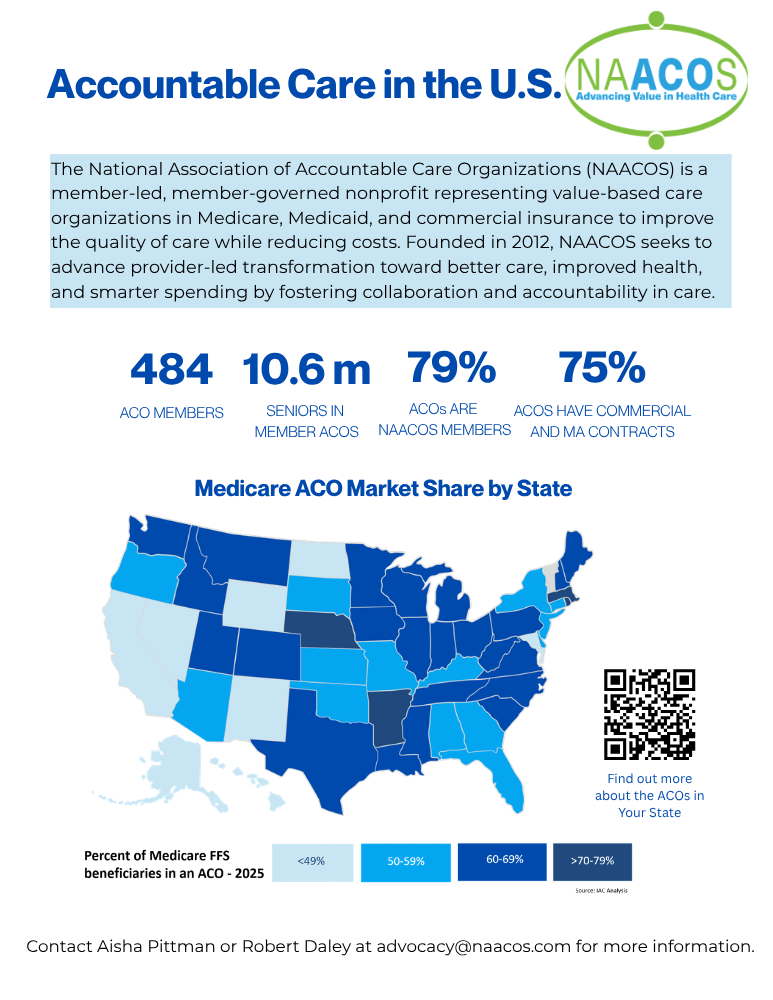
- Growth: More than half of traditional Medicare beneficiaries (more than 14 million) are cared for by clinicians that are participating in accountable care models.
- Savings: ACOs have generated $37.4 billion in savings with the average annual saving growing to over $700 per beneficiary.
- Outcomes: Patients that receive their care through an accountable care model have better health outcomes, including less emergency visits and hospitalizations.
To build on this progress, continued support from policymakers is needed to strengthen these innovative programs.
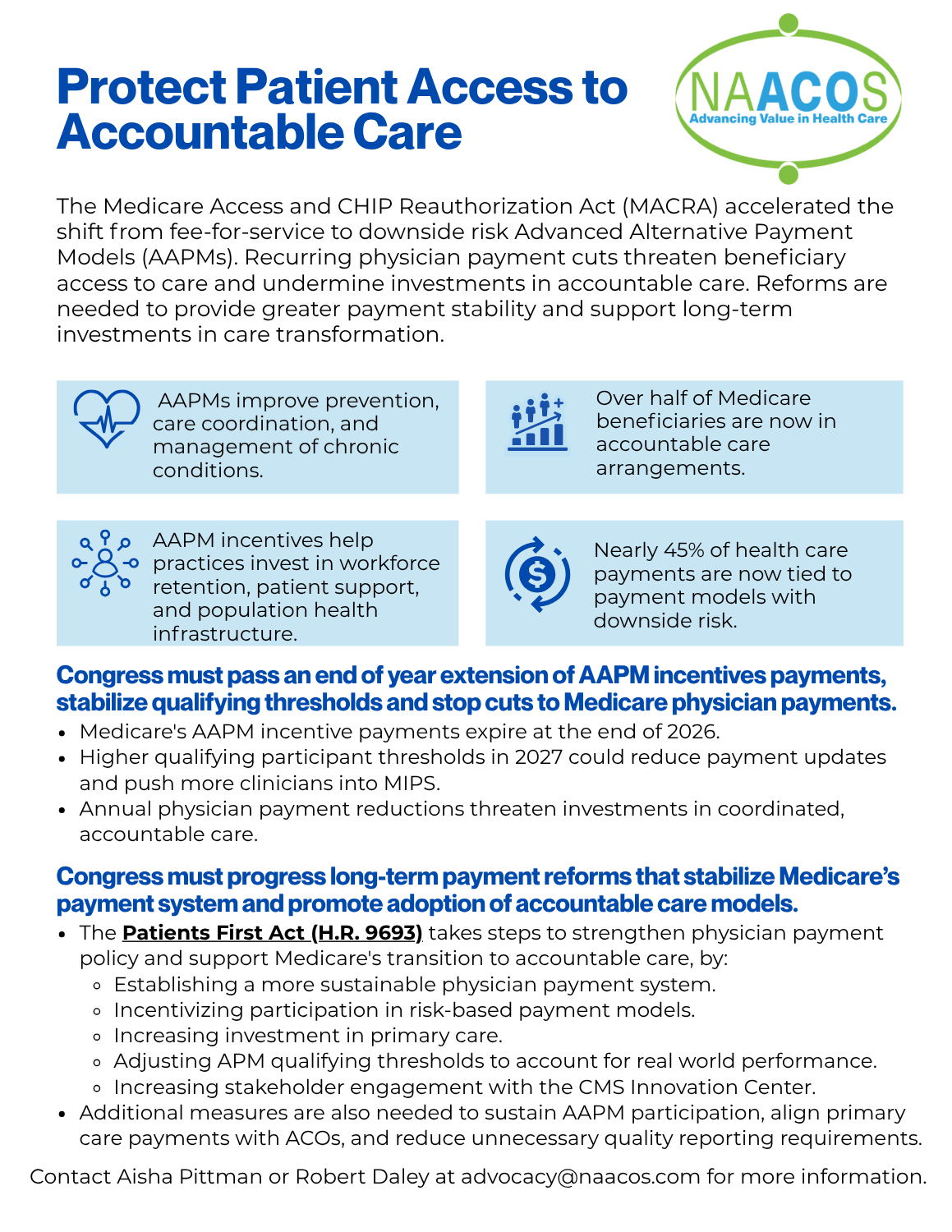
Medicare Payment Reform
Medicare’s advanced alternative payment model (AAPM) incentive payments encourage clinicians to join and remain in risk-based models and support enhanced services that are used to help improve patient outcomes.
Congress can support this transition by ensuring payment updates incentivize APM adoption and reflect inflationary pressures faced by practices.
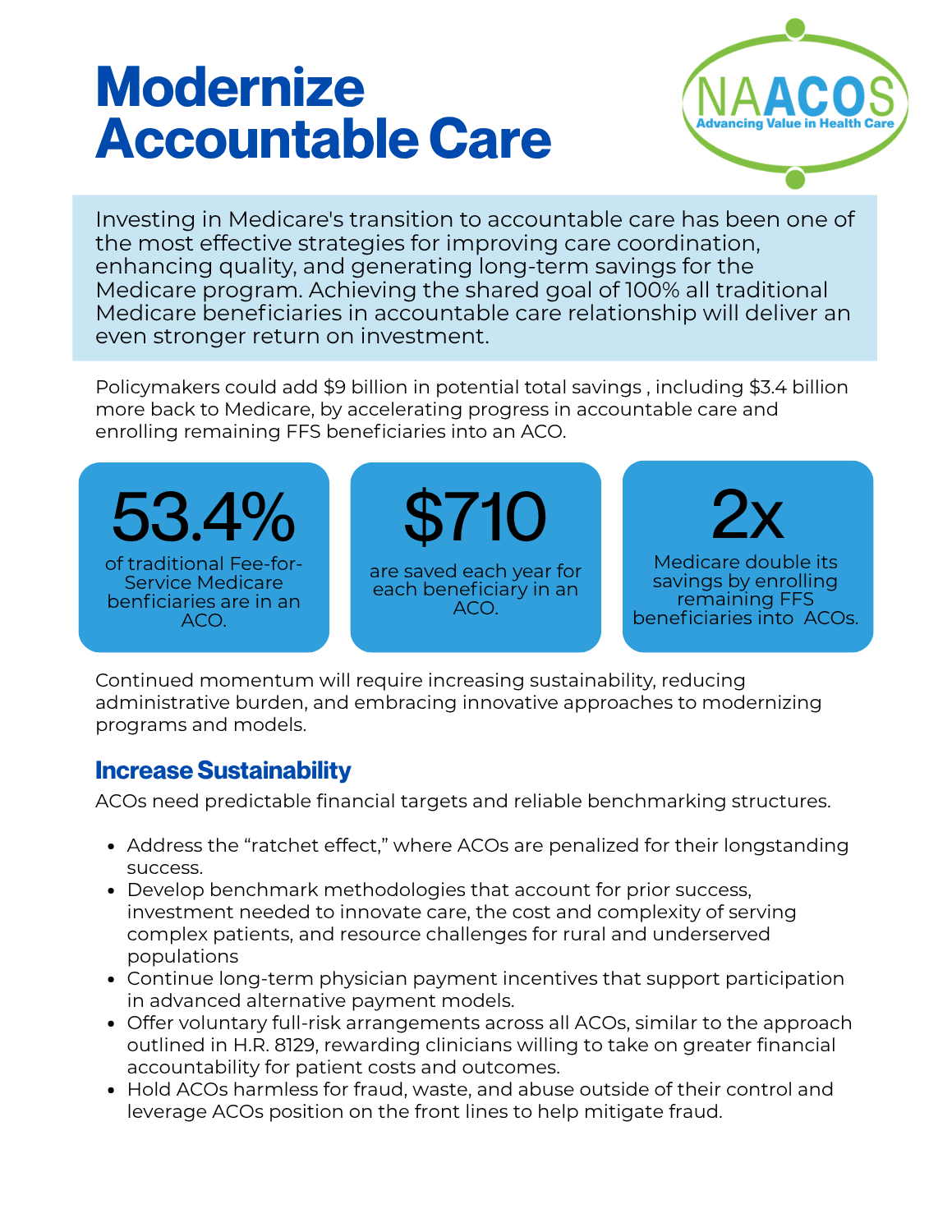
Modernize Accountable Care
Medicare’s accountable care models have improved outcomes, lowered costs, and tested new approaches to care delivery. Long-term sustainability of these models is essential.
Congress can support innovation by working with CMS to increase program sustainability, reduce burden, and embrace innovation.
Download our factsheets
Advocacy Letters
Read our recent relevant letters to Members of Congress.
Response to Patients First Act
(08/26)
Letter on MACRA Hearing
(05/26)